
Lisco Presbyterian Church: The Little White Church on the Corner
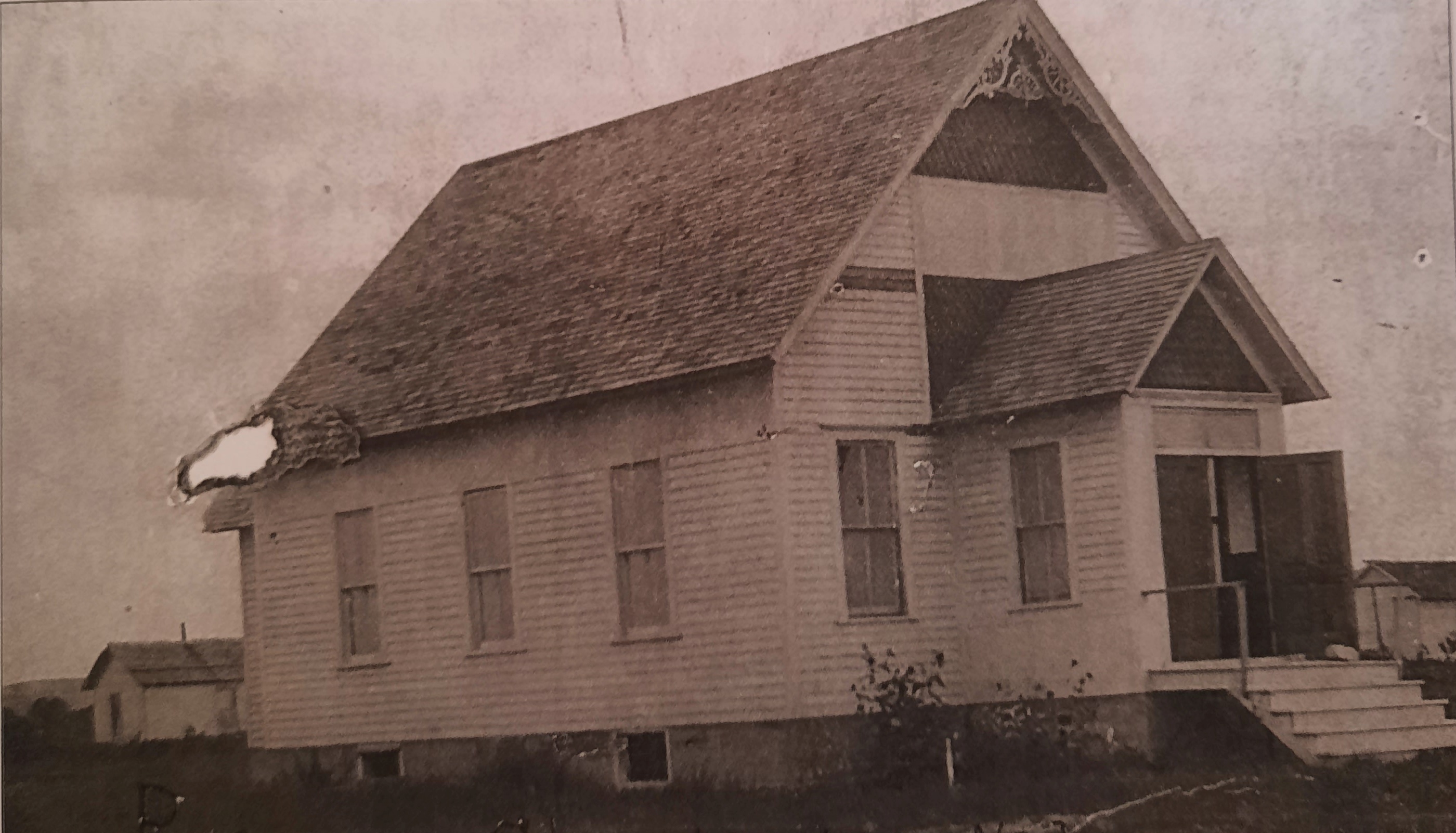
The original Presbyterian Church in Lisco, after it was placed on a basement. This church building was completed in the spring of 1910 and was dedicated on September 26th, 1911.
The Lisco Presbyterian Church was the first was the first denomination to organize a formal church in the Lisco community. The efforts of this group of people had its "roots" on the south side of the North Platte River. The first meetings were in the homes of some of the settlers, such as the James Millett family. The old sod schoolhouse was used for some services at a later date. The initial services, with an ordained minister, the Reverend Curren, from Alliance, Nebraska, were in the winter of 1908-1909. There wasn't a bridge across the river; therefore Reverend Currens had to wade across the river. Prior to the building of the church in Lisco, services were held in private homes or at the Union Pacific waiting room.
The first pastor to serve in the newly constructed church was Reverend J.T. Ellis. Reverend Ebey served the church in 1911. Reverend D.W. Montgomery was the pastor from 1912 through 1914. Reverend Snowden served the church in 1915. Other early Pastors were George Woodward, J.E. Stewert, W.H. Scofield, E.J. Dagley, J.W. Irwin, W.C. Rupert, R. Rich, Rev. Lewis, W.E. Brewer, H.L. Manning, Otto Fabre, and Otto Henn. Some of these very early pastors lived in Broadwater and they served both churches.
The church community built a parsonage in the late teens and Lisco had its own minister for a few years. In the forties and the fifties the church yoked with the Broadwater church and most of the time the minister lived in Broadwater.

This photo of the Presbyterian Church shows the church before the front step porch cover was placed over the outside steps and prior to the handicap ramp on the north and east of the church.
One of the ministers serving both Broadwater and Lisco was the Reverend Douglas Barnes. Reverend Barnes was a man that did a lot of good for both communities. He was very kind and he had a way of directing people toward a true Christian spirit and tolerance of other Christian views.
Reverend Barnes and Father John C. Madsen, the Catholic priest serving St. Gall's of Lisco were very good friends. They were both very dedicated men of the cloth. Both of them were proud of the progress made within each congregation and it was often observed how they both took great pride in showing their respective churches to each other.
Both churches were built onto and remodeled in the late forties and early fifties. It has been expressed by many people within the community, that these two men of God were twenty-five years ahead of the ecumenical movement within the Christian community.
Other ministers serving in recent years at the Presbyterian Church were C.P. Kidwell, Marvin Miller, LaVern Hicks, Don Ball, Elkan Kemp, Richard Brown, Mary Stringer, John Munson, Jerry Windsor, LeLand Rubesh, Don Littrel, Bob Willets, Burl Richard, Rod Castro, Vonne Blessman Anderson, and Cliff Transmeier. Several of these ministers served either Broadwater and Lisco or Dalton and Lisco at the same time.
Lisco Presbyterian Church: "The Little White Church in the Hole"
In the early 1920s it was decided that the Presbyterian Church building was inadequate for the size of the congregation. Therefore, it was decided that the church needed to be remodeled and that a basement was needed for a kitchen and meeting rooms. The church hired Everett Williams to do the excavation under the church and the Presbyterians gave the cement contract to Lou Hagemeister, manager of the Lisco Lumber Company.
The dirt had been removed from under the church by using a team of horses and a slip. Mr. Williams had just put his team of horses away when, all of a sudden there was a loud "roar" which was heard all over town. It was a Saturday afternoon and the town was full of rural people who were doing their weekly trading. The church building had fallen into the hole. The supports had given away and the church was tipped on end with the east end up in the air. Luckly, no one was injured and very little actual damage was done to the building.
Eventually the building was again leveled and the basement was completed. This was a nice addition to the church. It is doubtful that any residents are left in town that remember this incident, but the story has been passed on now for at least three generations or more. You would never know, by looking at the present day church, that this was once "The Little Church in the Hole."
Lisco Presbyterian Church Today
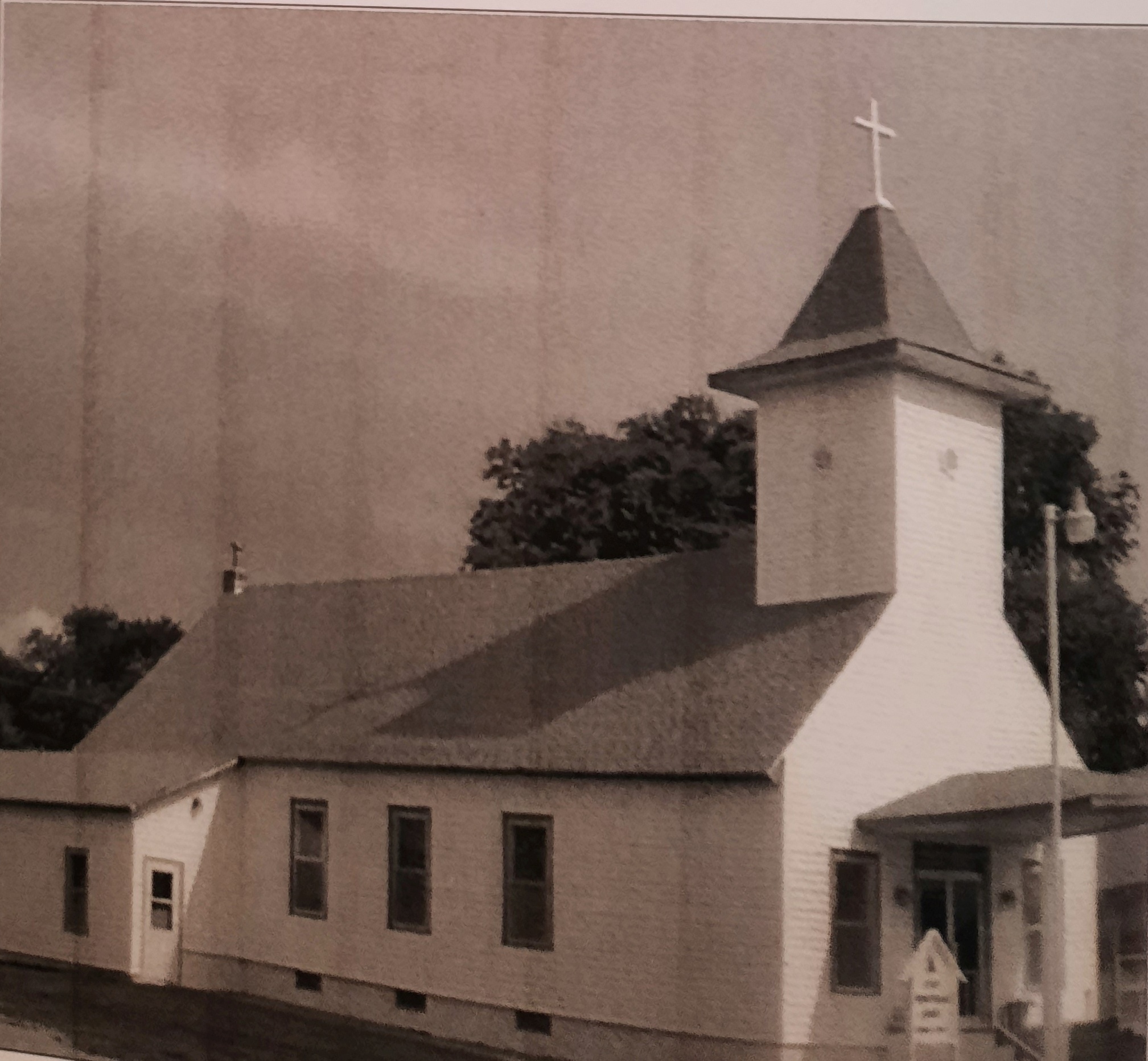
In 1954 the church had a major facelift. A ten foot extension was built onto the east front and outside steps to the basement were eliminated. The basement has an entrance at both the east and the west. In 1968 the basement was paneled and carpeted and the kitchen was remodeled in 1971.
Today Lisco has a very functional modern Presbyterian Church. The interior has been redecorated several times, however, the stained glass windows have made the sanctuary very attractive and this is one of several alterations throughout the years that has garnered the most attention.
William K. Vogler, Vanishing Dreams: The Story of Historic Lisco, Nebraska: Memoirs and Poetry (Morris Media 2008; abridged)
